Tuesday, July 28, 2015


Sunday, July 19, 2015
Stupid Motivational Tricks
Stupid Motivational Tricks
Concentration Secrets
Increasingly, I've used begun to listen to music while doing nothing else. I concentrate on the music itself rather than using it as background. When I meditate, and dismiss other thoughts that come up. When I am teaching, I am doing that. Nothing outside the classroom discussion exists for me. When I'm talking to a friend, that person gets my full attention.
When I write, I shut out other distractions. It could be in a crowded, noisy café, but that's what I do.
The secret of concentration is very simple. Don't multitask. Just devote yourself to whatever it is you are doing. It's true that I recite Shakespeare in the shower, so that while I am showering I am not only showering. Most things, though, are worth doing for themselves, without any other activity interceding.
If you think you can only concentrate for 10 minutes, then start there. Work on your project for exactly 10 minutes and gradually work up from there. You really only need to be able to concentrate for 25-30 minutes in order to make good progress on a larger project. You can write for 25 minutes, take a break, then do it again. Once you are used to concentrating it becomes habitual. You can turn your email off for those 25 minutes, because nothing is that urgent that can't wait such a short time.
I can concentrate for three hours on a project. That's about my limit, but I rarely have to work 3 hours a day on my research and writing. It's nice to know I could work three hours straight and think of nothing else, but I almost never have to use that excess capacity because I can accomplish a tremendous amount in 2 1/4 hours.
***
Often, I will tell myself that I have no concentration on a particular day before I even try to work. A huge mistake. It is much better to work anyway and then have the *concentration habit* kick in once you begin. The worst that can happen is a mediocre writing session that keeps in touch with your project.
On days I don't feel like exercising I might go to the gym anyway. I tell myself: "I will go to the gym in my gym clothes even though I am not going to exercise at all. " Then, once I am there, I figure out I might as well work out.
Posted by Jonathan
Source: http://prosedoctor.blogspot.ca/
Stag Beetles Stand Their Ground
 |
| Giant Stag Beetle, Sally Kneidel |
Source: http://veggierevolution.blogspot.ca/2015/07/what-fun-find-giant-stag-beetle.html
Stag beetle fight
Published on Sep 26, 2012
The males fly out in search of a female, when they find a female, there may already be a male around so the males fight, - using their jaws to to wrestle each other for favoured mating sites. Fights may also be over food, such as tree sap and decaying fruits.
Stag beetle is Europes largest insect. In many countries they are now thought to be very rare or even extinct.
You can help Stag beetle by leaving old tree stumps and deadwood alone. Or by making a log pile.
Female stags lay their eggs in rotting log piles and the roots of various rotten trees, including oak, apple, ash cherry and many others. Leave fallen trees in large pieces in contact with the soil so that the wood remains moist and is able to rot. Don't remove tree stumps if you are cutting down a dead, unsafe tree. And please don't burn the dead wood.
Stag beetle is Europes largest insect. In many countries they are now thought to be very rare or even extinct.
You can help Stag beetle by leaving old tree stumps and deadwood alone. Or by making a log pile.
Female stags lay their eggs in rotting log piles and the roots of various rotten trees, including oak, apple, ash cherry and many others. Leave fallen trees in large pieces in contact with the soil so that the wood remains moist and is able to rot. Don't remove tree stumps if you are cutting down a dead, unsafe tree. And please don't burn the dead wood.
The more decayning wood there is, the more places there are for the female to lay here eggs. You can help this amazing insect, you can be apart of making sure that the stag beetles has a chance in our future.
Stag beetle, Ekoxe, hjortebille, Hirschkäfer, hirvesokk beetle, lucane,
Source: https://www.youtube.com/watch?v=r34FSI2HKPY

Leopard
Sally Kneidel, PhD, a biologist, travel writer and trip planner from the United States who toured Welverdiend in 2007 and 2009. She is co-writer of both of these blogs
Monday, August 25, 2014
Bringing back a Wandering Attention - William James
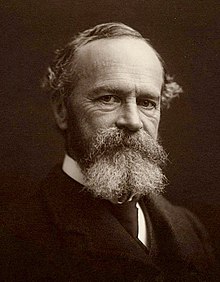
Be not afraid of life. Believe that life is worth living, and your belief will help create the fact.
William James was interested in mindfulness and attention:
“The faculty of voluntarily bringing back a wandering attention, over and over again, is the very root of judgment, character, and will. No one is compos sui [master of himself] if he have it not. An education which should improve this faculty would be the education par excellence.”
William James, Psychology: Briefer Course, p. 424 (Harper Torchbooks, 1961)
Be not afraid of life. Believe that life is worth living, and your belief will help create the fact.
William James was interested in mindfulness and attention:
“The faculty of voluntarily bringing back a wandering attention, over and over again, is the very root of judgment, character, and will. No one is compos sui [master of himself] if he have it not. An education which should improve this faculty would be the education par excellence.”
William James, Psychology: Briefer Course, p. 424 (Harper Torchbooks, 1961)
The Plastic Brain
Read this quote about how Merzenich thinks about his brain's decline.
"I want to put my brain to the best possible use as long as it is possible."
"Science tells us that a key to sustaining and growing our neurological abilities is seriousness of purpose. I am old enough to have retired, but shall not withdraw to a life of comfort and ease because I know that the brain slowly dies when nothing that it does matters to it. ... understand that what sustains your brain sustains you. You need to continue to work at things that support your brain's health now, and continue to work in ways that support it out to the end of your time on Earth."
- Dr. Michael Merzenich
Brain Plasticity sites:
Sunday, June 8, 2014
Wandering Attention
William James was interested in mindfulness and attention:
“The faculty of voluntarily bringing back a wandering attention, over and over again, is the very root
of judgment, character, and will. No one is compos sui [master of himself] if he have it not.
An education which should improve this faculty would be the education par excellence.”
William James, Psychology: Briefer Course, p. 424 (Harper Torchbooks, 1961)
Psychedelia
Alexander Shulgin, Psychedelia Researcher, Dies at 88
By BRUCE WEBER JUNE 7, 2014

Alexander Shulgin in his home laboratory in Lafayette, Calif.,
He created almost 200 chemical compounds
CreditAnthony Pidgeon/Redferns
Alexander Shulgin, a chemist who specialized in the creation of and experimentation with mind-altering substances, and who introduced the controversial drug popularly known as Ecstasy for potential therapeutic use, died on Monday at his home in Lafayette, Calif., east of Oakland. He was 88. The cause was cancer, his wife, Ann, said.
Dr. Shulgin, whose interest, as he put it once, was “in the machinery of the mental process,” was both a rogue and a wizard, a legitimate scientist and a counterculture hero.
Over more than four decades, working generally within the law (if occasionally on the edge), trying out his concoctions on himself, his wife and a few friends, and publishing his results, he was the creator of almost 200 chemical compounds capable of rejiggering the quotidian functions of the mind.
Dr. Ecstasy JAN. 30, 2005
As The New York Times Magazine cataloged Dr. Shulgin’s output in 2005:
“stimulants, depressants, aphrodisiacs, ‘empathogens,’ convulsants, drugs that alter hearing, drugs that slow one’s sense of time, drugs that speed it up, drugs that trigger violent outbursts, drugs that deaden emotion — in short a veritable lexicon of tactile and emotional experience.”
His work resulted in patents — his drugs have been used in treating hypertension, reducing nicotine cravings and addressing senility, among other things — but it has also been appropriated by recreational users, sometimes to dangerous effect.
In 1967, one of his compounds, popularly known as STP, whose effects include hallucinations and a sense that time has slowed down, was deployed in high doses by San Francisco thrill seekers, sending dozens, if not hundreds, to emergency rooms with fears that they would never return to normal.
Dr. Shulgin had something of a peekaboo relationship with the authorities. On the one hand, he had a strong relationship with the Drug Enforcement Administration; Bob Sager, formerly head of the agency’s Western Laboratory, was a close friend.
Dr. Shulgin often advised drug agents, served as an expert witness in drug trials, wrote a reference work on controlled substances used by law enforcement and for many years was licensed by the D.E.A. to do research on Schedule I drugs, those identified as having no clearly defined medical use and a high potential for abuse.
On the other hand, he sometimes ran afoul of the drug agency. Many of the compounds he worked with were not originally illegal because they had not existed until he created them, but once they did exist and had gained a public reputation, the drug agency often designated them Schedule I.
In 1993, the D.E.A. raided his lab, and he was fined $25,000 for violating the terms of the Schedule I license and had to turn it in.
Dr. Shulgin is probably best known for his re-synthesis of the drug MDMA, which had first been patented in 1914 by the German drug manufacturer Merck and later abandoned because no appropriate use of it had emerged.
In 1978, two years after he first made the drug in his laboratory and tried it on himself, he published a paper (with another chemist, David Nichols) that declared that MDMA induced “an easily controlled altered state of consciousness with emotional and sensual overtones.”
He thought it could be therapeutic in reducing anxiety and other emotional problems.
Some therapists indeed found that it encouraged rapid improvement in some patients, but after MDMA migrated to recreational use — and became known as Ecstasy, or X — the D.E.A. classified it as a Schedule I drug.
It was banned in the mid-1980s, at a time when Nancy Reagan’s “Just Say No” campaign against drug use was at its peak. In recent years research on its potential uses (for example, in the treatment of traumatized war veterans) has re-emerged.
Alexander Theodore Shulgin, who was known as Sasha to friends, was born in Berkeley, Calif., on June 17, 1925. His parents were teachers, and he was a precocious student, entering Harvard at 16. He left college to join the Navy during World War II, serving in Europe.
He told The Times that his interest in the way the mind works dated to his military service, when a nurse gave him orange juice before he had surgery for a thumb infection. He found undissolved crystals in the bottom of the glass and, assuming they were the remains of a sedative, fell unconscious. It turned out that the crystals were sugar, and the way his mind had tricked him provoked a lifelong curiosity. He later earned a doctorate in biochemistry from the University of California, Berkeley.
It was in 1960, while he was working for Dow Chemical, that Dr. Shulgin had his first psychedelic experience. He used the drug mescaline, and an epiphany resulted — that it was possible to chemically extend the horizons of perception.
“I understood that our entire universe is contained in the mind and the spirit,” he said. “We may choose not to find access to it, we may even deny its existence, but it is indeed there inside us, and there are chemicals that can analyze its availability.”
It was an idea he spent his career exploring, earning the freedom to do it when he created one of the world’s first biodegradable insecticides and traded the patent for Dow’s support in his drug research. (Eventually the relationship became too uncomfortable for the company, and the connection was severed.)
Dr. Shulgin was the author of five books that documented his work, including two, self-published in the 1990s, that focus on particular families of chemical compounds — “PiHKAL,” short for “Phenethylamines I Have Known and Loved,” and “TiHKAL” (“Tryptamines I Have Known and Loved”). Both, which he wrote with the aid of his wife, describe his work in detail and his experiences in sampling it.
“I feel absolutely clean inside, and there is nothing but pure euphoria,” he wrote of MDMA in “PiHKAL.” “I have never felt so great or believed this to be possible. I am overcome by the profundity of the experience.”
The D.E.A. was not pleased about the books. In an interview with The Times in 2005, a spokesman for the agency’s San Francisco Field Division said, “It is pretty much our opinion that those books are pretty much cookbooks on how to make illegal drugs.”
Alexander Shulgin, Psychedelia Researcher, Dies at 88 - NYTimes.com:
Link: http://www.nytimes.com/2014/06/08/us/alexander-shulgin-psychedelia-researcher-dies-at-88.html?nl=todaysheadlines&emc=edit_th_20140608&_r=0
Friday, February 7, 2014

Wednesday, January 8, 2014
Cormac McCarthy's former wife pulled weapon from her vagina - Vagina Used As Holster

Novelist's Ex In Bizarre Handgun Threat Arrest
Cormac McCarthy's former wife pulled weapon from her vagina
JANUARY 8--A domestic dispute over space aliens escalated Saturday morning when a lingerie-clad New Mexico woman allegedly pointed a silver handgun at her boyfriend, a weapon she retrieved from her vagina, where it had been placed while the accused was performing a sex act, police allege.
To make matters more strange, the arrested woman is the most recent ex-wife of Pulitzer Prize-winning novelist Cormac McCarthy, author of “The Road” and “No Country for Old Men.”
As detailed in a probable cause statement, Jennifer McCarthy, a 48-year-old artist, argued about space aliens with her 53-year-old beau, whose name was redacted from the document released by the Santa Fe County Sheriff’s Office. When questioned by deputies, McCarthy reportedly acknowledged that she “did have a gun at the time” the couple was yelling at each other.
McCarthy’s boyfriend told investigators that following the argument McCarthy departed her Aventura Road residence. Upon returning to the home, he told deputies, McCarthy went into her bedroom and later emerged “wearing lingerie and a silver handgun in her vagina.” She then proceeded to “have inner course with the gun,” according to the court filing.
While using the gun as a sex toy, McCarthy reportedly asked her boyfriend, “Who is crazy, you or me?” The probable cause statement, drafted by Deputy Chris Zook, does not indicate whether McCarthy’s boyfriend dared to answer that query.
After removing the gun from her vagina, McCarthy pointed it at her boyfriend’s head, investigators charge. Fearing that he could get shot, the man grabbed the weapon from McCarthy and put it in the toilet.
McCarthy’s boyfriend subsequently “took it out of the toilet and put it in the trash can outside.” Deputy Zook reported that he recovered “a silver Smith and Wesson in the outside trash can.”
Pictured in the above mug shot, McCarthy was arrested on a felony charge of aggravated assault on a household member.

Novelist's Ex In Bizarre Handgun Threat Arrest
Cormac McCarthy's former wife pulled weapon from her vagina
Vagina Used As Holster

Vagina Used As Holster
Tuesday, March 5, 2013
Quotes about Books

There is no mistaking a real book when one meets it. It is like falling in love.
~Christopher Morley (1890-1957)
Books are the quietest and most constant of friends, they are the most accessible and wisest of counselors, and the most patient of teachers.
~Charles W. Eliot (1834-1926, American University President of Harvard)
A book is like a garden, carried in the pocket. ~Chinese proverb
One of the advantages of reading books is that it allows us to play with someone else's imaginary friends, at all hours of the night.
~ SunWolf
The things I want to know are in books. My best friend is the man who'll get me a book I ain't read.
~Abraham Lincoln

Image credit: Vladmir Kush
http://vladimirkush.com Source:
Courses - SunWolf
http://professorsunwolf.com/courses.html
Subscribe to:
Posts (Atom)